

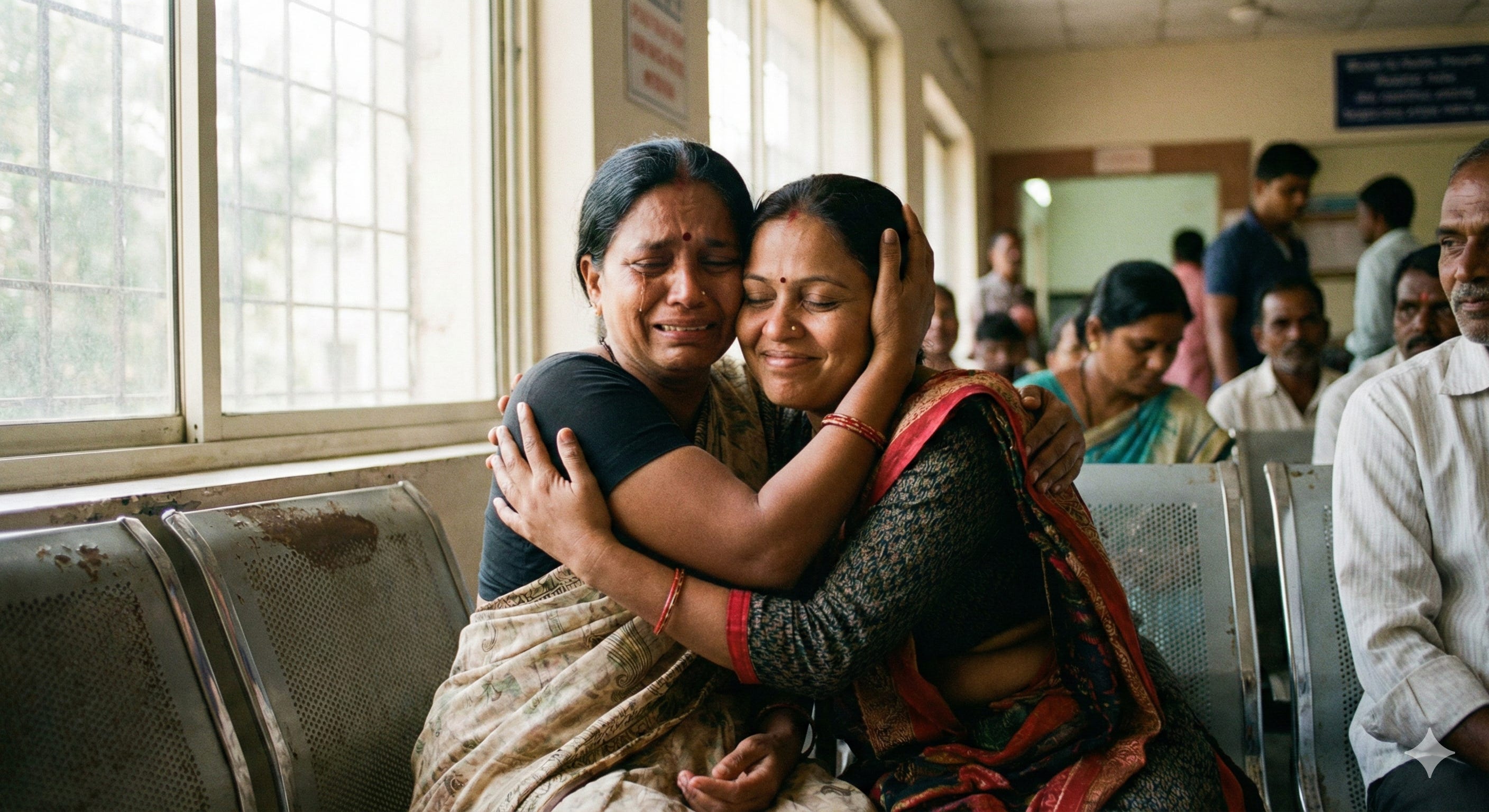
The day before Priya’s first treatment, Meera drove four hours to see her.
She had blocked the entire day. No calls. No work emergencies. No excuses.
When Priya opened the door, she looked surprised.
“You actually came.”
“I said I would.”
“People say things.”
Meera hugged her. “I’m here.”
They sat in Priya’s living room. Tea growing cold. Talking about everything and nothing.
Meera had read her notebook entries before coming. She knew what Priya was worried about. The treatment side effects. The uncertainty. The loneliness of going through something that nobody around her understood.
She didn’t make Priya explain from scratch. She didn’t need the backstory. She just listened to where Priya was now.
“I’m scared of being a burden,” Priya said at one point. “Everyone has their own life. Their own problems. Why should they make room for mine?”
“You’re not a burden. You’re my friend.”
“We hadn’t talked in years.”
“We’re talking now.”
They looked at old photos. College memories. Younger faces. Simpler times.
“Do you remember the night before our final exams?” Priya asked. “We stayed up until 4 AM, not studying, just talking. About what we wanted our lives to be.”
Meera smiled. “I remember being terrified about the future.”
“Me too. But somehow less terrified because we were terrified together.”
Meera thought about how many times they had been there for each other. How many late-night conversations. How many moments of fear shared and halved.
And how easily she had let that slip away.
“Can I tell you something?” Meera said.
“Of course.”
“When I heard you were sick, I felt guilty. I realized I knew nothing about your life anymore. I had been so caught up in my own world that I missed months of what you were going through.”
Priya was quiet for a moment. “You’re not the only one. Everyone’s caught up. Everyone’s busy. Everyone’s somewhere else.”
“That’s not an excuse.”
“No. But it’s common. I had started to think maybe that’s just how adult friendships work. You drift apart. You lose the thread. You become strangers who used to know each other.”
“Is that what we became?”
Priya looked at her. “I don’t know. What do you think?”
Meera thought about her notebook. The entries about Priya. The commitment to remember.
“I don’t want to be strangers,” she said. “I want to know what’s happening in your life. Not the highlight reel. The real stuff. The scary stuff.”
“That requires showing up.”
“I know.”
“Regularly. Not just when there’s a crisis.”
“I know.”
Priya smiled. A real smile. The first one Meera had seen since she arrived.
“Then let’s try.”
They made a plan. Simple but specific.
Every Sunday. A phone call. Not a text. Not a like on a post. A real conversation.
No matter what. Fifteen minutes minimum. More if they had time.
“It sounds so simple,” Priya said. “Why does it feel revolutionary?”
“Because we’ve been trained to think connection should be effortless. A tap. A swipe. A quick message. The idea of scheduling time to talk feels almost old-fashioned.”
“Maybe old-fashioned was onto something.”
The next morning, Meera drove home.
Four hours in the car. Plenty of time to think.
She thought about what friendship actually requires. Not just affection. Not just history. But attention. Intention. Showing up, even when it’s inconvenient.
She thought about how easy it is to substitute the shallow for the deep. To mistake a like for a conversation. To confuse being connected with being close.
She thought about Priya’s face when she opened the door. The surprise that someone actually came.
People say things.
How many times had Meera said things and not followed through? How many times had she meant to call, meant to visit, meant to reach out, and let it slip?
This time was different. This time she showed up.
Six months later.
Priya finished treatment. The scans came back clear.
Meera was there for the results. In the waiting room. Holding her hand.
When the doctor delivered the news, Priya cried. Meera cried too.
“I couldn’t have done this without you,” Priya said.
“You did the hard part.”
“You showed up. Every Sunday. Every call. Every time I needed to vent or cry or just hear a familiar voice. You were there.”
Meera thought about her notebook. Pages filled with Priya’s journey. The fears. The small victories. The bad days and the good ones.
She had written it all down. Not because she had to. Because she wanted to remember. Because Priya mattered.
“That’s what friends do,” she said.
“No,” Priya said quietly. “That’s what friends should do. Most don’t. You did.”
Meera went home that night and wrote one more entry.
June 15. Priya. Cancer-free. Six months of treatment, and she made it. I was there when she got the news. She cried. I cried. She said I showed up. I think she showed me something too. What it means to be a friend. Not just in the easy moments. In the hard ones. In the ones that cost something. That’s where friendship becomes real.
She closed the notebook.
Outside, the sun was setting. Her phone sat untouched on the counter.
For once, she didn’t feel like she was missing anything.
What Meera Learned
Friendship isn’t about affection. It’s about attention.
Showing up is harder than it sounds. It requires intention. It requires time. It requires choosing one person over the infinite other demands on your attention.
The shallow substitutes for the deep too easily. A like feels like connection. It isn’t. A text feels like presence. It isn’t. Showing up, being there, making time, that’s what counts.
Real friendship costs something. Time. Effort. Inconvenience. That’s not a bug. That’s the point.
The people who matter deserve more than what’s left over. They deserve the first portion.
Where We Come In
At Rikonect, we’re building tools for people who want to show up.
A place to remember what matters. A place to capture the moments that count. A place to invest in the relationships that shape who you become.
Because in the end, we don’t remember the likes. We remember the people who came.